The debate between synthetic grass and natural grass is fueled by aesthetic, ecological, and practical considerations. On one hand, natural grass appeals with its authenticity and benefits for the ecosystem, providing a habitat for wildlife and contributing to air quality. On the other hand, synthetic grass attracts with its low maintenance requirements and resilience to climate whims. Choosing between these two options involves weighing the advantages, such as the durability and ease of maintenance of synthetic grass, against the disadvantages, including potential environmental impacts and the initial installation cost.
Detailed Comparison: Synthetic Grass vs. Natural Grass
Synthetic grass, often praised for its durability, presents itself as a long-term solution. With a lifespan ranging from 20 to 25 years, it requires little water, and the use of fertilizers and pesticides can alter groundwater. Not to mention the need for thermal mowers for all needs, generating noise and greenhouse gas emissions.
Practicality is also a consideration. While one might argue that the initial installation cost of synthetic grass is higher than that of natural grass, it proves to be a cost-effective investment in the long run due to its almost zero maintenance. Artificial turf offers comfort of use in all seasons, without the constraints of mowing, watering, or fertilizing. In contrast, natural grass requires regular attention to maintain its aesthetics and health, thus involving a significant investment of time and resources.
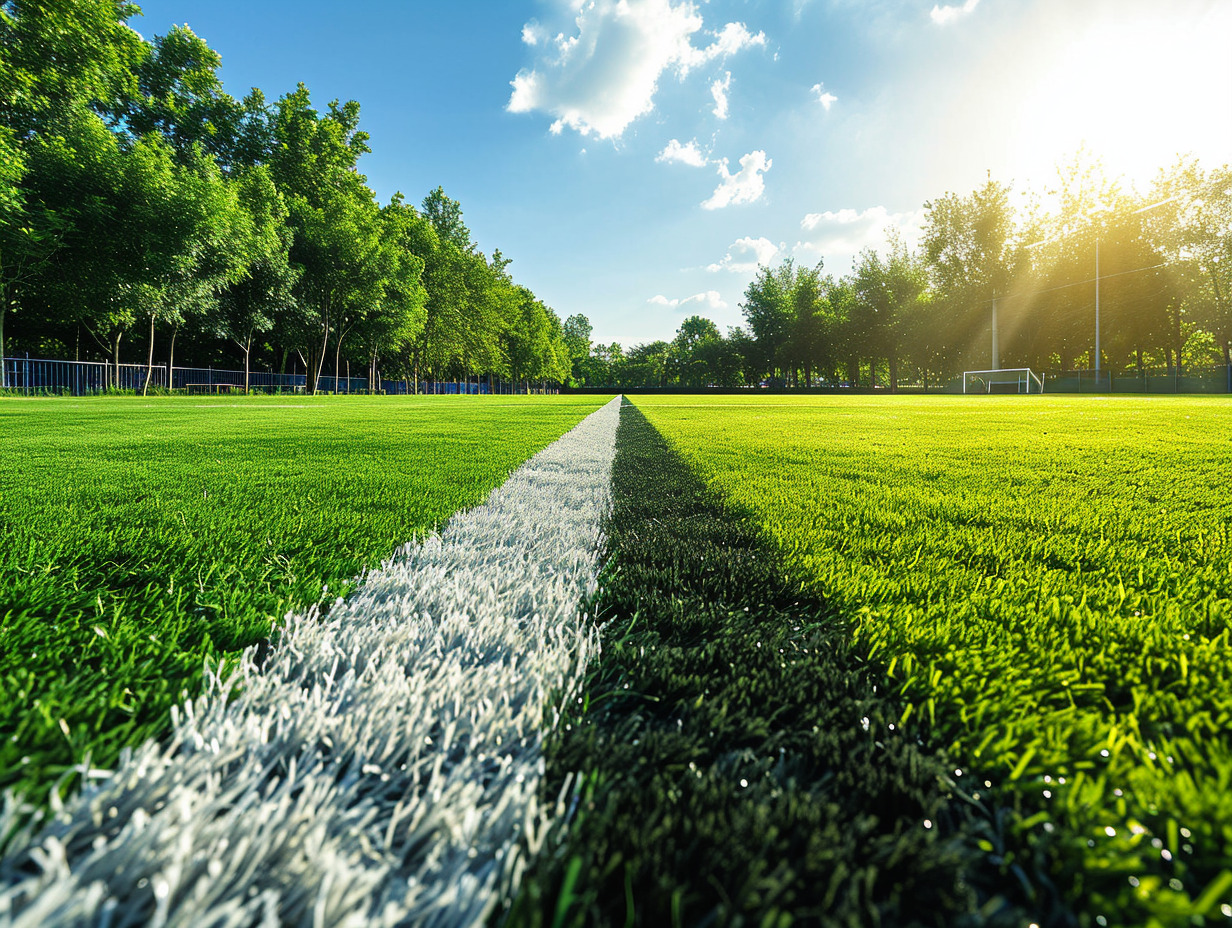
Environmental Impact and Practical Considerations
In the debate between synthentic grass and natural grass, the ecological aspect is paramount. Artificial grass, despite reducing water consumption and the absence of groundwater pollution, raises questions about its manufacturing and recycling processes. The production of artificial grass comes with a carbon footprint that must be measured precisely. Recent innovations aim to minimize this impact by improving the recyclability of the materials used. Natural grass, for its part, positively contributes to the environment through its action on air quality and its role in biodiversity preservation. However, its dependence on water and chemicals for maintenance must be balanced against its ecological benefits.
Now let’s address the question of durability. The longevity of synthetic grass, which can last up to 25 years, is a major asset. This durability translates into a lesser need for repairs or replacements, which implies a reduced environmental impact in the long term. In contrast, natural grass requires constant regeneration and can suffer from diseases or droughts, necessitating frequent interventions to maintain its integrity and aesthetics.
Consider cost as a determining factor in the choice between these two options. While synthetic grass requires a more substantial initial investment, particularly due to its specialized installation, it proves economical over the years due to the absence of recurring maintenance costs. Natural grass, on the other hand, assumes a regular maintenance budget for watering, mowing, and fertilizing, not to mention the investment in time and equipment. These economic considerations must be evaluated based on the goals and resources of each user.