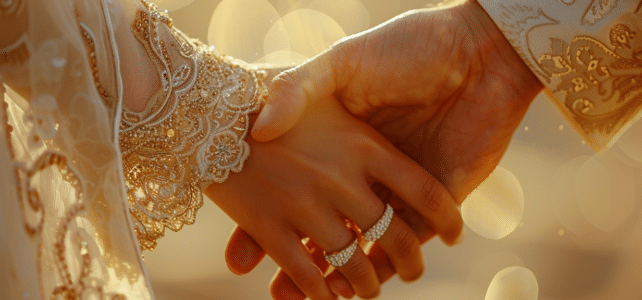
Marriage commitment within Muslim culture is much more than a simple union between two people; it represents an act deeply rooted in spiritual and social values. The rituals and traditions surrounding this fundamental moment reflect Islamic principles such as piety, fidelity, and family. The Nikah, marriage ceremony, is the expression of these values and illustrates the solemnity of the commitment made before God and witnesses. It seals the marriage contract that goes beyond emotional ties, incorporating legal, ethical, and community dimensions.
The foundations of marriage commitment in Islam
Halal marriage is part of an Islamic tradition where the union of a man and a woman is preceded by specific principles. This type of marriage, often practiced by descendants of Maghrebi immigrants, incorporates notions of endogamy and places significant importance on the virginity of women. It is a form of marriage that not only meets religious standards but also serves as an identity marker within the community.
Muslim associations play a predominant role in the socialization of young Muslims, particularly regarding marriage. They institutionalize matrimonial meetings, manage religious norms, and respond to the needs of young people, guiding their choices in accordance with Islamic values. Through these associations, the marriage market is structured, allowing young people to find a partner that aligns with their religious and social expectations.
As for matchmakers and Islamic dating sites, they represent two contemporary facets of matrimonial organization. Matchmakers, traditional figures, assist in organizing the marriage market and educate young Muslims about the concept of coupledom in Islam. On the other hand, Islamic dating sites provide online platforms designed to facilitate meetings for halal marriages, thus adapting ancestral practices to the digital age. These modern tools reflect the desire to anchor the marriage process in a framework that is both respectful of traditions and open to the possibilities offered by technology.
The rites and celebrations of Muslim marriage
The Muslim wedding ceremony is a crossroads of ancestral traditions and contemporary adaptations. At the heart of this celebration, the bride adorns herself in a white dress, then dons traditional costumes, embodying purity and cultural continuity. The henna ceremony, a moment of beauty and sharing, often precedes the official celebration. It brings together women and men, in some cases separately, to draw symbolic patterns on the bride and the groom, announcing their transition to married life.
The involvement of the family in organizing the wedding is crucial. They orchestrate the festivities, ensure the respect of rites and traditions, and guarantee the transmission of values. This organization can be complemented by paid services, calling on external providers who bring their expertise in planning and executing a wedding that aims to be both sumptuous and faithful to community expectations.
The Oriental wedding fairs, essential gatherings in major metropolitan areas, testify to the vibrancy and demand of Muslim communities for grand celebrations. These events provide insight into wedding trends and offer a range of dedicated services, from haute couture to event entertainers, reflecting the dynamism of a rapidly expanding market.