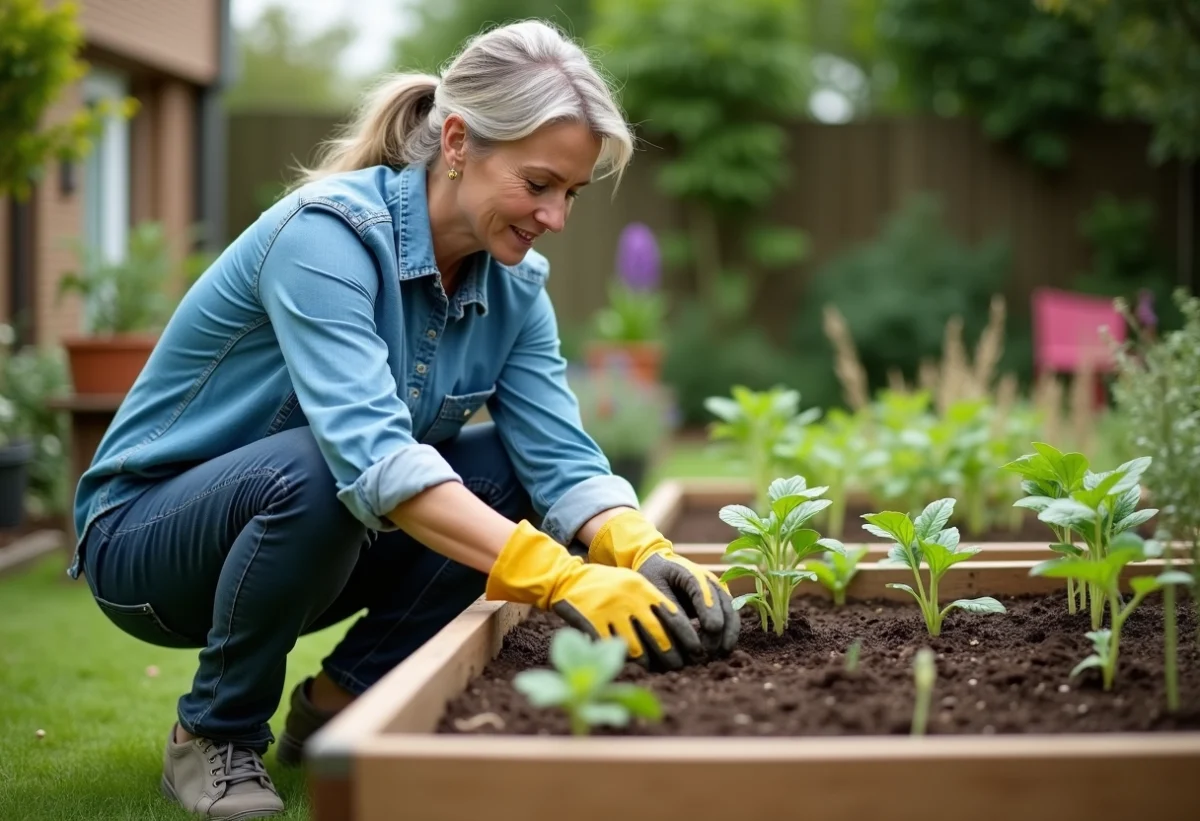
A perfectly mowed lawn consumes three times more water than an area planted with local perennials. In some regions, legislation now limits the use of pesticides in gardens, profoundly changing maintenance habits.
Planning green spaces is based on optimization principles that are often counterintuitive: plant less, choose plants better, space out interventions. Some techniques, long reserved for professionals, now allow for reduced maintenance time while promoting biodiversity. These methods respond to a growing demand for efficiency and simplicity.
Why choosing a minimalist garden can transform your daily life
Forget gardens saturated with fragile plants and decorative ornaments that multiply chores. The minimalist garden embodies a practical approach, perfectly suited to the fast pace of contemporary life. In this space, every family member finds a functional and peaceful place designed to integrate into the routine without generating additional constraints. The idea is simple: lighten the mental load, focus on the quality of the experience. Here, sobriety goes hand in hand with friendliness and elegance.
A garden for everyone is conceived based on tangible criteria: soil composition, orientation, local climate, administrative constraints, budget envelope. Minimalism encourages the preference for robust, low-maintenance plants that are naturally adapted to their environment. This choice limits interventions and promotes ecological balance. Welcoming garden wildlife, such as birds, insects, hedgehogs, or lizards, transforms the space into a small ecosystem where one learns to observe and marvel from a young age.
In this logic, every element counts: well-chosen lighting, discreet furniture, decorative objects selected for their utility or aesthetics. The clean lines of the furniture, natural materials, and consideration of topography give coherence to the whole. Nothing is superfluous; everything is designed to integrate and last.
The Conseil Jardinage website is full of concrete ideas for successfully achieving this type of layout. It provides a guiding thread for transforming your garden space by focusing on simplicity: less maintenance, more autonomy, a regained harmony between humans and nature right near home.
What are the essential principles for simple and harmonious landscaping
The design of your garden starts with careful observation of the land: soil analysis, exposure identification, climate assessment, and consideration of slopes or local restrictions. Each plot has its particularities, and it is by adapting to them that one reveals the natural beauty of the place, without unnecessary artifice. Visualize your ideas on a scaled plan: this allows you to define relaxation, play, or cultivation areas and optimize circulation. Zoning, often underestimated, brings valuable fluidity to daily life and enhances each space.
To structure and organize your garden coherently, here are the key points to remember:
- Delimit spaces with hedges, fences, trellises, or screens: they naturally outline the contours and ensure a certain intimacy.
- Structure the layout with paths, borders, or flowerbeds, without falling into excess. A well-placed path often suffices to guide the eye and facilitate movement.
- Optimize the choice of materials and plants: evergreen shrubs, climbing plants, a few carefully selected trees, or an adapted floral palette bring structure and rhythm to the whole.
The garden furniture, chosen with discernment, integrates seamlessly into the landscape. Terrace, discreet shelter, reading nook: everything finds its place, far from accumulation. If the project seems complex, a landscape designer can guide the design to ensure overall harmony, without excess or heaviness.
Now, digital tools like 3D modeling software and planning checklists make these processes accessible. One can anticipate needs, from the vegetable garden to the pool, including the play area and lawn, to create a garden with a strong identity but without overload. Every gesture, every material, every planting choice contributes to the overall balance, without ever weighing down the whole.
Concrete tips for easily maintaining a low-impact ecological garden
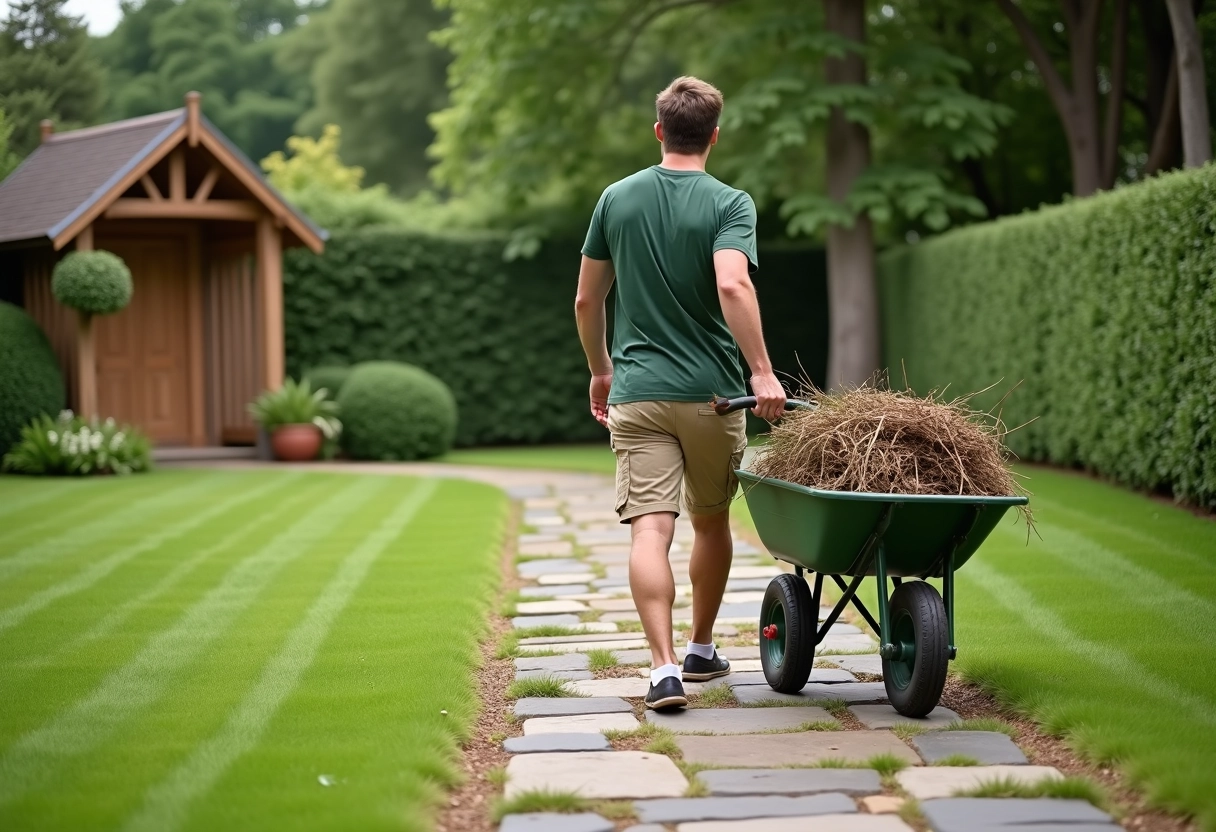
To lighten garden maintenance while respecting the environment, mulching proves to be highly effective. It retains moisture, blocks the emergence of unwanted weeds, and nourishes underground life. The result: less watering, less weeding, a living and fertile soil, with minimal effort required.
Selecting low-maintenance plants that are suited to the climate and soil simplifies daily management. By grouping species with similar needs, one limits the necessary care: spaced watering, reduced pruning, infrequent diseases. Mixed flowerbeds combining perennials, shrubs, and ground covers are more resilient to climatic fluctuations and form a natural barrier against pests.
The organization of watering makes a difference. A controlled watering system, automated if necessary, delivers just the right amount of water at the right time, avoiding waste. Targeting watering at the base of plants, instead of spraying the entire garden, enhances plant resilience and limits disease proliferation.
Adapt your actions with each season: in autumn, adding compost or well-rotted manure regenerates the soil. In spring, light pruning and removing faded flowers stimulate growth. Regularly monitor the flowerbeds: a quick intervention limits damage in case of insects or fungi.
Finally, the presence of wildlife, birds, beneficial insects, and small mammals, is an asset. Leave some wild corners, reduce chemical treatments, and increase the variety of species. This is the key to a sustainable balance where life settles and renews itself with the seasons. The garden then becomes the discreet theater of a rediscovered nature, always in motion.