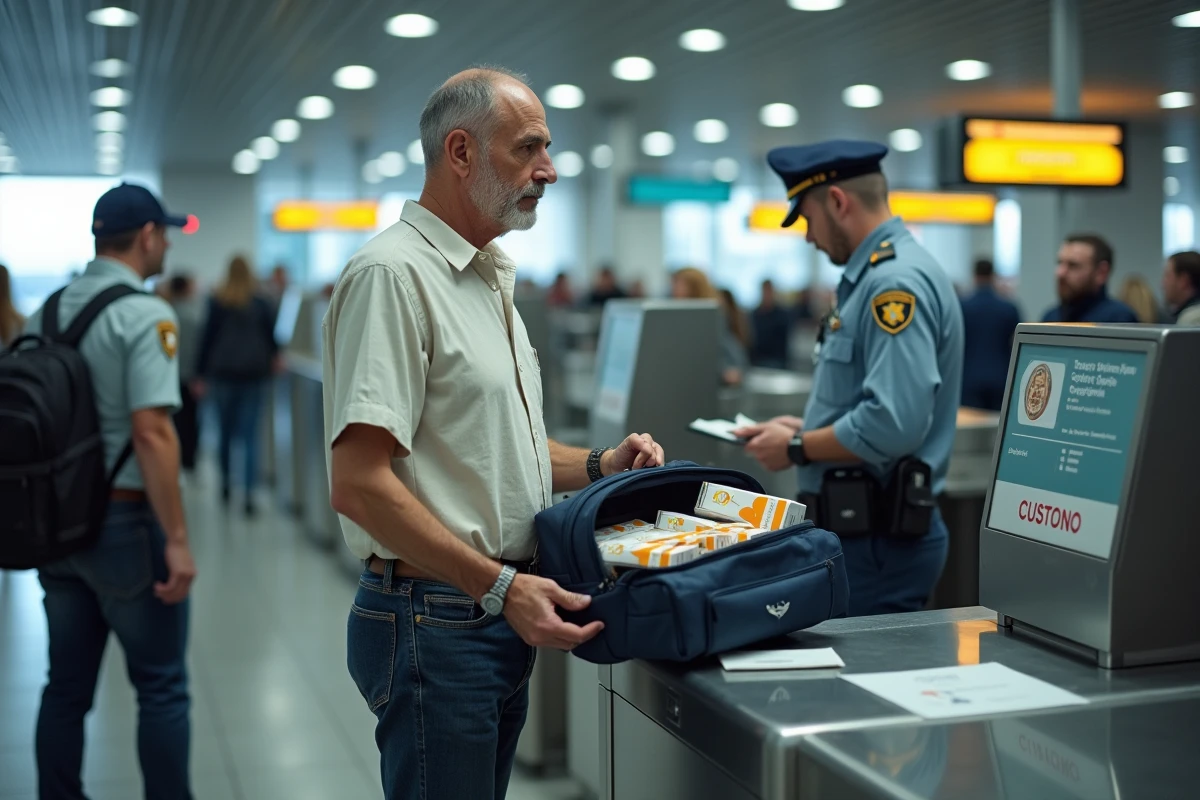
The decree n°2024-276 of March 27, 2024, has redefined the framework applicable to the transport of tobacco from a European Union country to France. In 2026, this text remains the reference: the legal limit is still set at 800 cigarettes per person, or four cartons. Despite the sensational headlines about an alleged “end of limits,” the French customs apply this threshold unambiguously.
Decree n°2024-276 and European jurisprudence: why the ambiguity persists
The confusion lies in a gap between two levels of law. The European directive 2008/118/EC, followed by its recast 2020/262, establishes the principle of free movement of goods subject to excise duties within the EU. Several court decisions have reminded that member states cannot set arbitrary quantitative thresholds to prohibit importation for personal use.
France responded with decree n°2024-276 of March 27, 2024, published in the Official Journal on March 28, 2024. This text does not directly contradict European law: it maintains an indicative ceiling of 800 cigarettes, 400 cigarillos, 200 cigars, and one kilogram of rolling tobacco, qualifying it as a presumption threshold for personal use.
In practice, transporting four cartons or less does not trigger any procedure. Beyond that, the burden of proof shifts: the traveler must demonstrate that the tobacco is intended for their own consumption. We observe that this nuance is systematically omitted in the mainstream press, which fuels misunderstandings at the border crossing. To know precisely how many cartons of cigarettes are allowed from Spain in 2026, one must read the decree and not the media shortcuts.

Targeted controls in the Pyrenees: what customs really checks in 2026
The Franco-Spanish routes concentrate customs pressure. The regional customs directorate of Nouvelle-Aquitaine reported, in its annual report for 2025 published in February 2026, a significant increase in checks and tobacco seizures at the border. The classic crossing points (Le Perthus, La Jonquera, Dancharia, Hendaye) are the most monitored.
Profiling is no longer limited to the volume transported. Agents cross-reference several indicators:
- The frequency of vehicle passage, detected by automatic license plate reading on the same routes.
- The crossing times, particularly early in the morning or late in the day, typical slots for tobacco round trips.
- The consistency between the number of declared passengers and the amount of tobacco present in the vehicle.
A regular traveler carrying four cartons every weekend will be treated differently from an occasional tourist with the same quantity. Repetition has become a criterion for suspicion of commercial intent, even below the threshold of 800 cigarettes.
Seizures below the legal threshold
We recommend not to consider the 800 cigarettes as an automatic right. If the bundle of indicators points to resale (homogeneous quantity of brands, unopened packaging, high frequency), customs can seize the goods and initiate a procedure, even for three cartons. The text refers to “personal consumption needs,” and this notion is assessed on a case-by-case basis.
Andorra, the Canaries, and overseas territories: the thresholds that do not change
Mainland Spain falls under the classic intra-community regime. Three situations escape this framework and apply much lower thresholds, often unknown to travelers passing through the Iberian Peninsula.
Andorra remains subject to a specific regime: the principality is not a member of the European Union in customs terms. The quantities allowed for tobacco coming from Andorra remain those applicable to third countries, which are significantly more restrictive than the intra-community threshold.
The Canary Islands benefit from a special tax status within Spain. They are not part of the territory to which the excise directive applies. A return from Tenerife or Gran Canaria therefore follows the extra-EU rules, not the regime applicable to a purchase in Barcelona or Irun.
The French overseas departments and regions are also not subject to the intra-community regulations on excise duties. A resident of Martinique returning from the mainland with tobacco is subject to different thresholds.
Rolling tobacco, cigarillos, cigars: the thresholds by product category
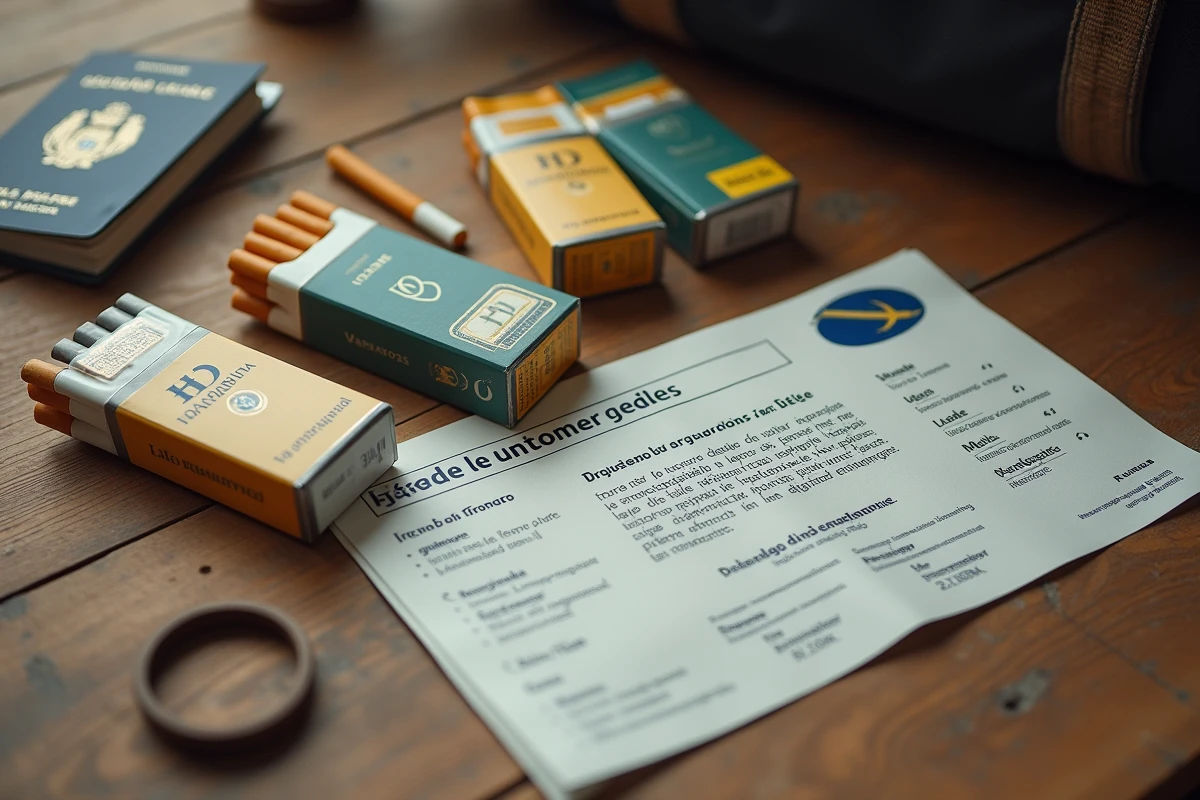
Most travelers think in terms of cartons of cigarettes. However, the decree covers four categories, each with its own indicative ceiling:
- Cigarettes: 800 units, or four cartons of 200.
- Cigarillos (unit weight less than three grams): 400 units.
- Cigars: 200 units.
- Smoking tobacco (for rolling or pipe): one kilogram.
These thresholds do not cumulate linearly. A traveler carrying 400 cigarettes and 200 cigarillos will need to justify that the total corresponds to their personal consumption if customs deems the volume atypical. The principle of proportionality applies: combining several categories to maximize the total volume is a signal that agents are well aware of.
Heated tobacco and emerging products
Heated tobacco sticks (like IQOS or equivalents) fall into the “cigarettes” category in customs terms. The ceiling of 800 units thus applies to sticks in the same way as to traditional cigarettes. No specific exemption exists for these products under current French law.
The price differential between Spain and France remains the main driver of these cross-border purchases. The continuous increase in French taxation on tobacco maintains the gap, but the penalties for exceeding or suspicion of resale quickly negate the savings made. Keeping a receipt, transporting only quantities consistent with actual personal use, and spacing out trips remains the only reliable approach to cross the border without incident.