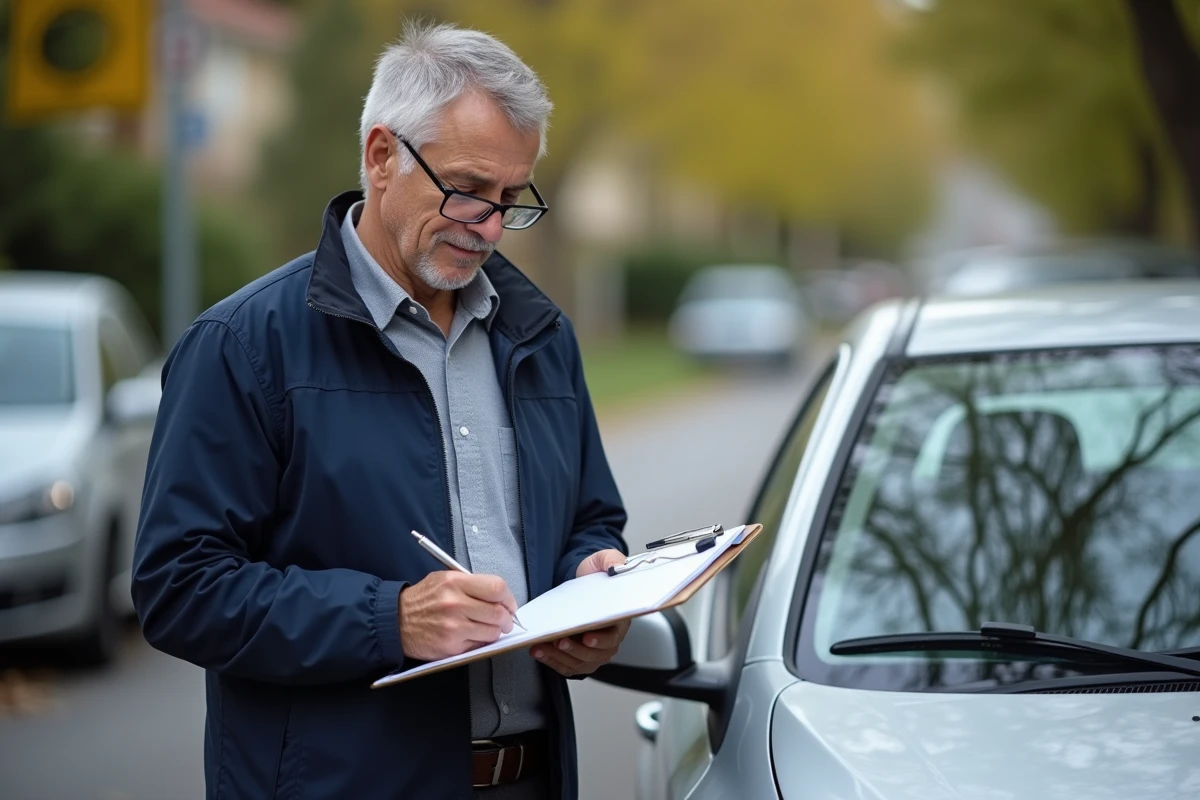
You have just been involved in a bump in a parking lot or a rear-end collision at a red light. Both drivers get out, exchange a few words, and then each leaves without filling out any documents. Three days later, neck pain appears, and the question arises: is it still possible to report the incident to your insurer?
Legal deadline to report a car accident to your insurer
The insurance code sets a clear framework. After a road accident, the driver has five working days to report the incident to their insurance company. This deadline starts from the day the accident occurred, not from the day the amicable report was filled out.
Specifically, if the bump occurs on a Monday, the last day to send the report is the following Monday (Saturdays, Sundays, and public holidays do not count). This calculation in working days offers a bit more leeway than it seems.
To understand precisely how long to fill out an amicable report, one must distinguish between two things: filling out the form at the scene of the accident, and sending the document to the insurer. There is no obligation to fill out the report on the spot. Two drivers can very well meet the next day to complete the document together, as long as they respect the reporting deadline.
Late amicable report: real consequences on compensation

The five working days deadline is not an absolute cutoff. A delay does not automatically lead to a refusal of compensation. However, the insurer may invoke this exceedance if the delay has caused them harm, for example, by preventing them from appointing an expert in time or verifying the condition of the vehicles.
In practice, most companies accept a report that arrives a few days late, provided the file is complete. The risk increases when the delay stretches into weeks. The longer the time passes, the more difficult it becomes to reconstruct the circumstances of the accident.
Two situations worsen the matter:
- The complete absence of a report signed by both parties, which leaves each insurer to reconstruct their version of events based solely on their client’s testimony.
- Late submission without supporting documents (photos, testimonies, police report), which undermines the credibility of the report.
- An unreported bodily injury within the deadlines, which can complicate the coverage of medical expenses by insurance.
Photographing the damage and the position of the vehicles on the day of the accident remains the most useful reflex, even if the report is not filled out on-site.
E-constat auto: immediate transmission and timestamping
The e-constat auto application, promoted by French insurers, allows you to fill out and transmit a report directly from a smartphone. The main advantage lies in the automatic timestamping: the date and time of submission are recorded, eliminating any ambiguity regarding compliance with the deadline.
Since 2025, the adoption of the e-constat has significantly progressed. The transmission is immediate, which eliminates the risk associated with postal delays. The e-constat constitutes a timestamped proof accepted by all insurers.
Some precautions should be taken when using it:
- Ensure that the other driver validates their part of the report in the application, otherwise the document remains incomplete.
- Keep a screenshot of the summary sent, in case a technical issue arises.
- Make sure that the vehicle and the associated insurance contract are correctly filled out in the application before any incident.
Fraud detection by insurers: what algorithms check
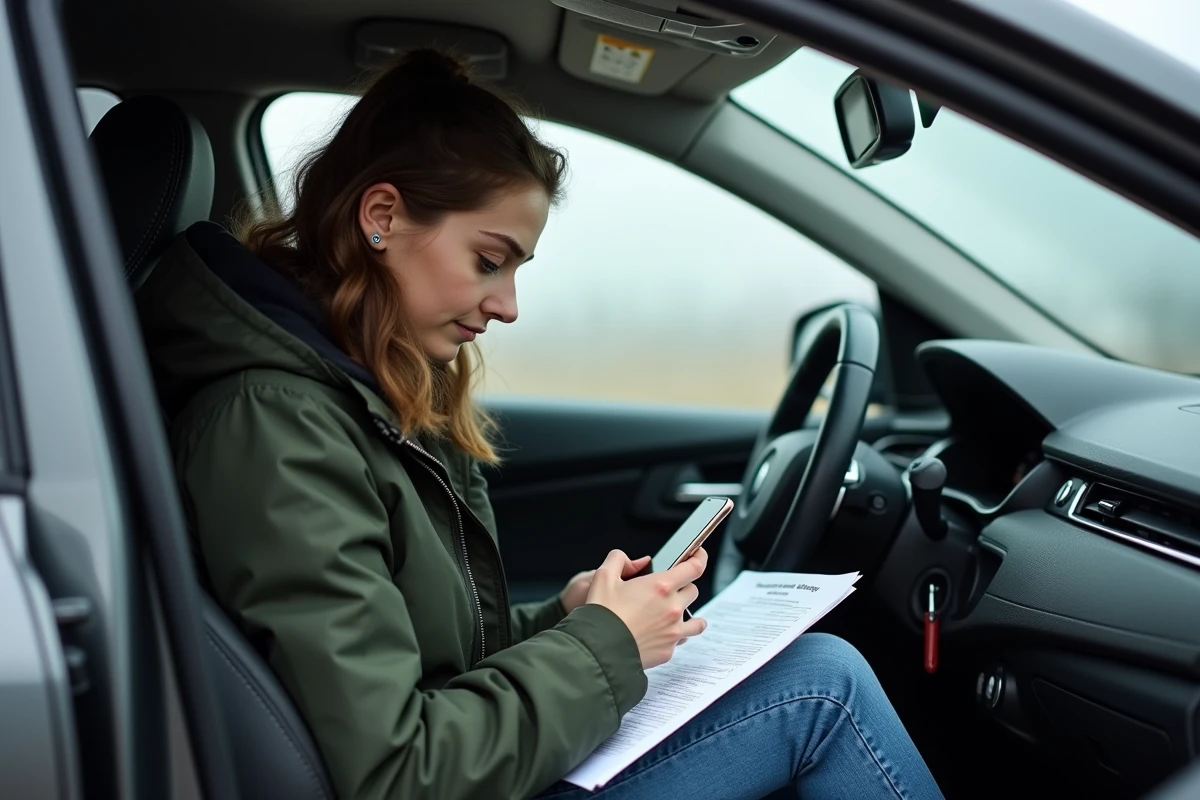
Insurance companies now use artificial intelligence tools to analyze reports submitted online. These algorithms cross-reference several types of data to spot inconsistencies.
Photos are compared to the metadata of the file (date of capture, geolocation, phone model). A photo dated from the wrong day or taken at an address far from the declared location triggers an alert. The AI also analyzes the consistency between the description of the damages and the images provided.
Textual declarations undergo linguistic processing. A narrative that is too formatted, identical phrasing between two distinct reports, or unusually technical vocabulary for a layperson can signal coordinated fraud.
For an honest driver, the best protection is to provide raw and unedited elements. Photos taken at the scene of the accident with geolocation enabled constitute the most difficult evidence to contest. Modifying an image, cropping to hide an element, or sending photos taken on a different date exposes one to a refusal of coverage, or even cancellation of the contract.
Accident without a report: alternatives and possible recourse
The amicable report is not the only way to report an accident. If the other driver refuses to sign it or flees, other options exist.
Filing a complaint or a statement with law enforcement allows for formalizing the circumstances. The police or gendarmerie report can replace the report in the file submitted to the insurer. In the event of a hit-and-run, the Guarantee Fund for Mandatory Insurance (FGAO) can intervene to compensate the victim when the responsible party is not identified.
A simple registered letter with acknowledgment of receipt sent to the insurer, describing the facts and accompanied by photos, is sufficient to open a claim file within the allotted time.
The key point to remember after an accident is that the five working days deadline allows time to gather the necessary documents, but not to postpone the process. Each additional day reduces the quality of available evidence and complicates the insurer’s work, which ultimately always turns against the insured.