You have already slipped on a pair of Skechers and felt immediate relief under the arch of your foot. This cushy, almost enveloping sensation gives the impression that the foot is protected. However, podiatrists nuance this feeling: the comfort perceived during fitting does not guarantee good support over hours of walking.
Soft sole and Skechers cushioning: what the foot really endures
The main selling point of Skechers is based on memory foam and generous cushioning. In-store, the foot sinks into the sole, and the sensation is pleasant. But this softness poses a specific biomechanical problem.
A highly cushioned sole absorbs shocks, which provides short-term relief. In return, it reduces the stability of the midfoot and hindfoot. The foot moves more inside the shoe, which can exacerbate excessive pronation or destabilize the ankle in individuals who are already vulnerable.
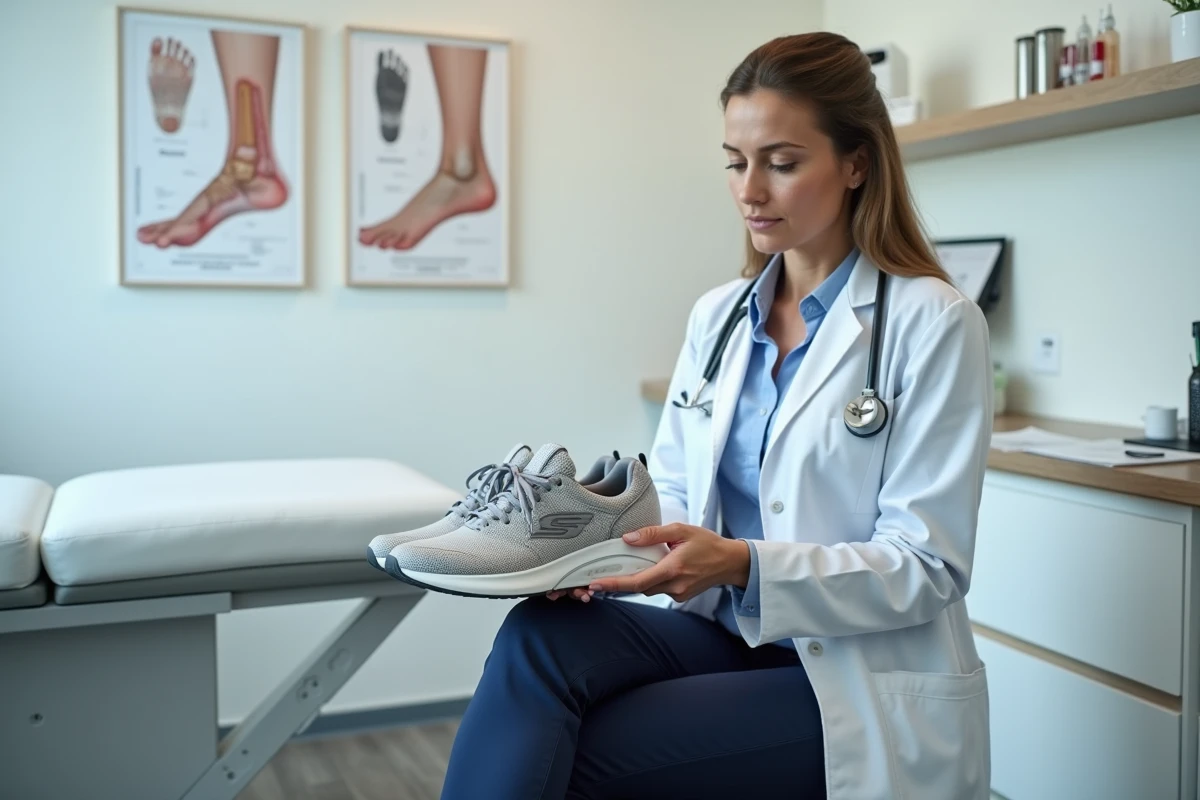
The opinions of podiatrists on Skechers shoes converge on one point: significant cushioning does not replace a good fit. In other words, the foam does not correct anything. It temporarily masks a support defect that only a clinical examination can identify.
Have you ever noticed abnormal fatigue in your calves or knees after a long walk in very soft shoes? This is often a sign that the foot lacks guidance. The muscle compensates for what the sole does not stabilize.
Plantar fasciitis and Skechers: relief or aggravation
Plantar fasciitis is one of the most common conditions in podiatric consultations. It manifests as pain under the heel, especially in the morning upon waking. Many patients turn to Skechers hoping that the cushioning will soothe the pain.
Cushioning alone is not enough to treat plantar fasciitis. What the foot needs in this case is firm support of the arch and stability of the hindfoot. However, several Skechers models offer a soft cushion without a rigid structure under the arch.
The result: the pain sometimes decreases in the first few days, then returns. The plantar fascia continues to endure excessive traction with each step because the foot sinks into the sole instead of being held in place.
Profiles for which the risk is more pronounced
- People with a bunion (hallux valgus) need a sufficiently wide forefoot and lateral support that very soft models do not always provide
- Daily walkers who spend several hours on their feet require more midfoot stability, a criterion where cushioning alone shows its limits
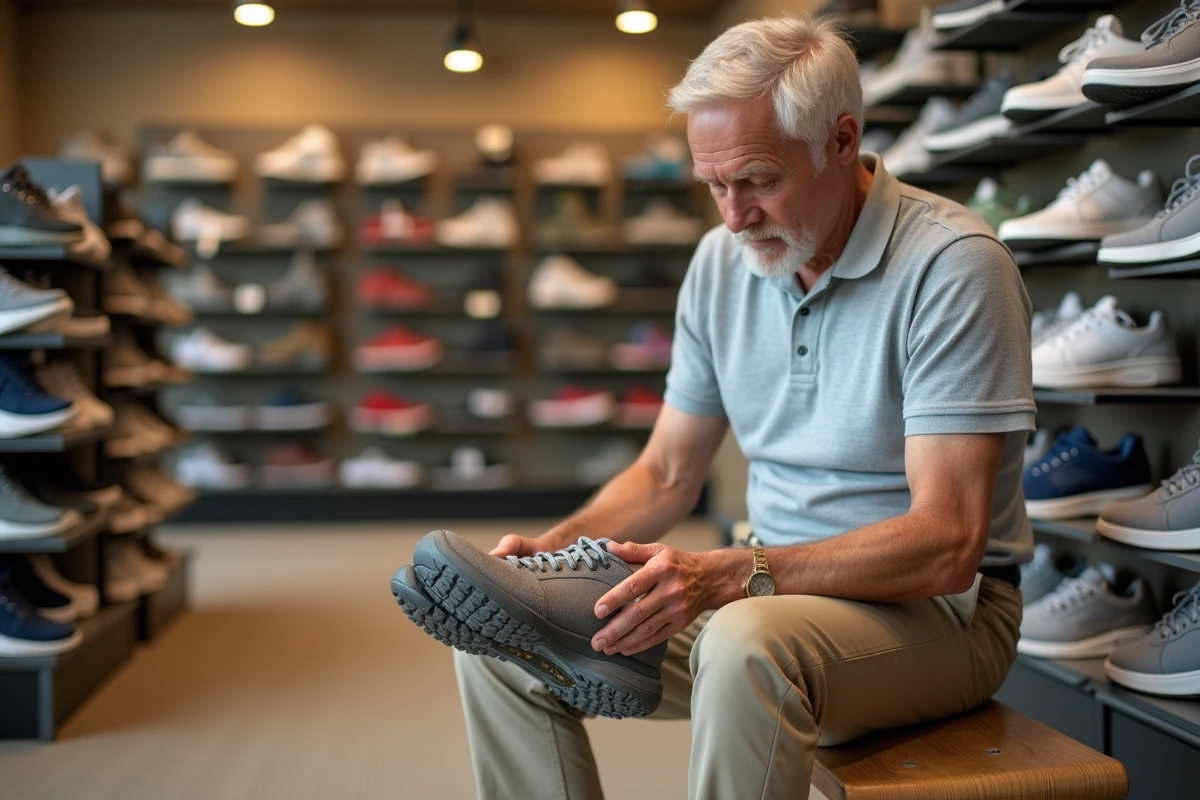
- Seniors, especially those who use slip-on models (hands-free), gain convenience but may lose ankle support
Skechers Arch Fit models: a more suitable range according to podiatrists
Not all Skechers models are created equal. The Arch Fit range, for example, incorporates an insole designed based on podometric data. It offers more structured arch support than classic memory foam models.
This distinction is rarely explained in stores. A casual walking Skechers model and an Arch Fit 2.0 do not provide the same level of support at all. The former focuses on plushness, while the latter strikes a balance between comfort and stability.
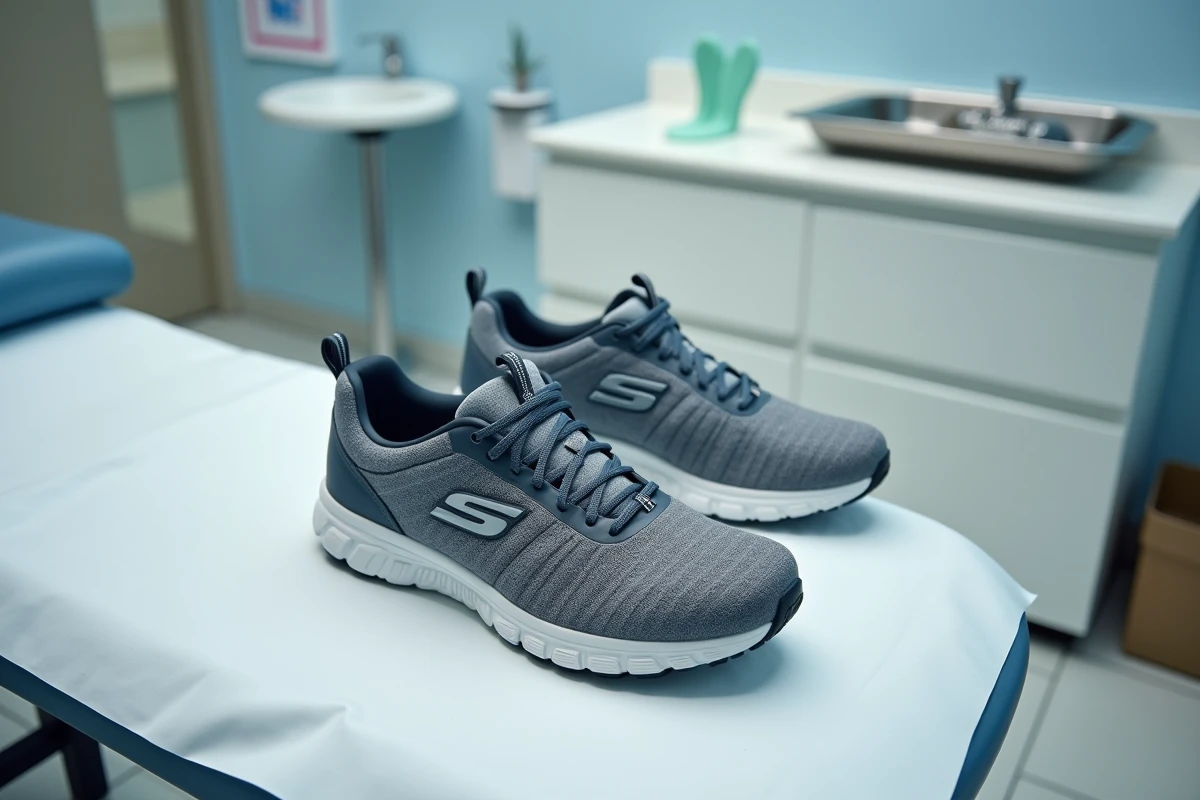
Podiatrists recognize that some Arch Fit models may be suitable for light daily use, provided the foot does not have a condition requiring orthopedic correction. A well-chosen Skechers can be a stopgap, but it does not replace a custom orthotic insole.
What to check before buying
- The rigidity of the sole under the arch: press with your thumb in the center, it should not collapse completely
- The heel counter (the part that surrounds the heel): it should resist when you press it laterally; otherwise, the foot will not be guided
- The width of the forefoot: toes should be able to spread without being cramped, especially for wide sizes
- The possibility of removing the insole to replace it with an orthotic if necessary
Running and sports shoes: Skechers facing podiatric demands
For running or training, expectations change. The foot endures repeated impacts, and the shoe must both cushion and control movement. Skechers running models have improved in recent years, but they remain less documented in biomechanics than some specialized brands.
No podiatrist recommends a sports shoe solely based on perceived comfort. The choice depends on the type of stride (pronation, supination, neutral stride), the runner’s weight, and the training surface. A podiatric assessment before purchase remains the most reliable method to avoid injuries.
Skechers running shoes may be suitable for occasional runners with a neutral stride and no history of injury. For other profiles, a visit to the podiatrist can determine if the chosen model is compatible with foot mechanics.
What podiatrists concretely recommend
The main message from foot professionals does not target a specific brand. It addresses a common mistake: choosing shoes solely based on immediate comfort. A shoe that seems comfortable in the store may prove unsuitable after a few weeks of daily use.
The right reflex is to have your posture and support evaluated before any purchase, especially in cases of recurring pain in the feet, knees, or back. Skechers are neither to be banned nor adopted thoughtlessly. Their range is wide, and the model that suits a foot without specific pathology may exacerbate the symptoms of another.
The next time you try on a pair, test the heel counter, flex the sole, check the width. These three actions take ten seconds and reveal more about the quality of support than all the marketing promises written on the box.