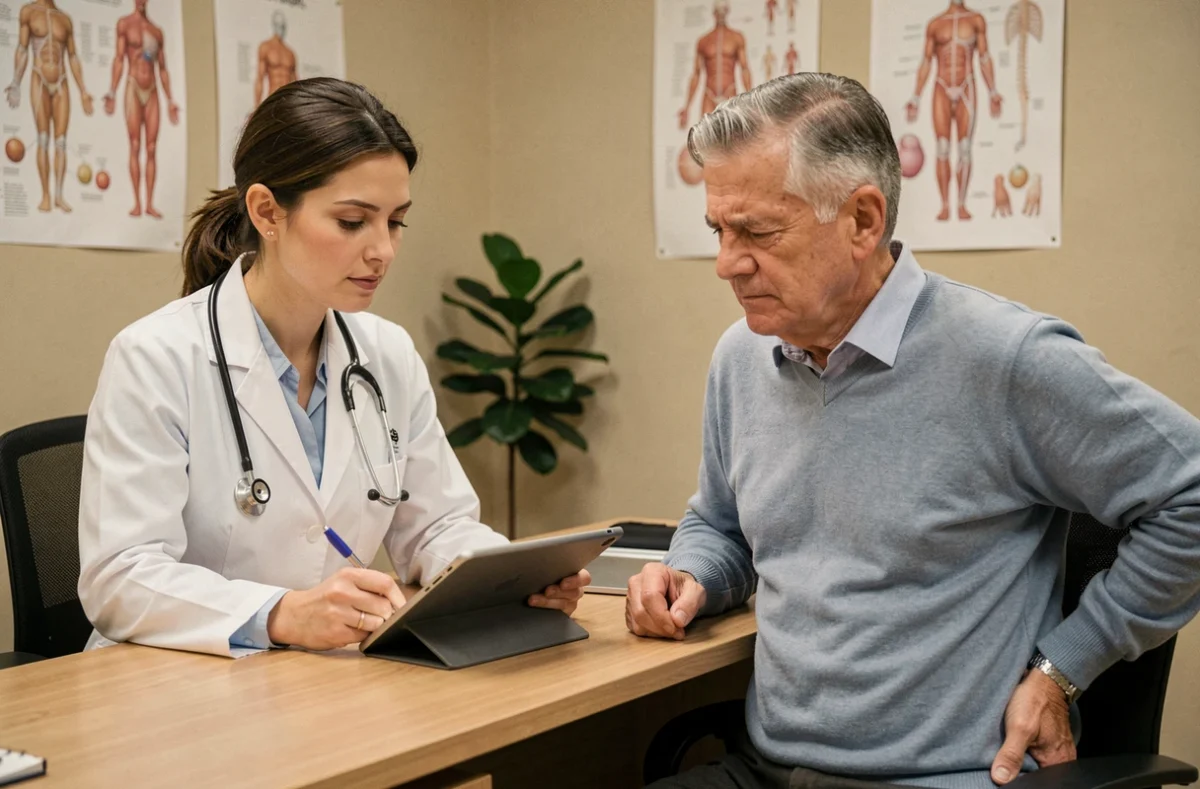
A postoperative patient grimacing without saying anything, an elderly person in a nursing home refusing to move, a child crying but unable to locate their discomfort: on the ground, pain rarely manifests clearly. Healthcare professionals facing this daily need concrete tools, reliable coordination, and an updated framework to adjust their response.
Pain assessment at the patient’s bedside: the pitfalls that distort care
It often starts with a numerical or visual analog scale. The reflex is good, but it’s not enough. For non-communicative patients (cognitive disorders, sedation, very young age), self-assessment is unusable. It is necessary to switch to behavioral hetero-assessment, and that’s where feedback varies according to teams and departments.
The most frequent error in practice: assessing pain only once at admission, then not re-evaluating. Pain fluctuates with care, fatigue, and anxiety. Rigorous traceability in the care record, with timestamps and context (rest, mobilization, care), changes the quality of monitoring. Professionals wishing to structure this approach can rely on the site moncoachdouleur.fr for professionals, which offers resources tailored to daily clinical practice.
Another underestimated point: pain induced by care. Punctures, dressings, mobilizations: these actions generate predictable pain. Anticipating with analgesic premedication or non-drug techniques (distraction, hypnoanalgesia) reduces the pain-anxiety-pain spiral.
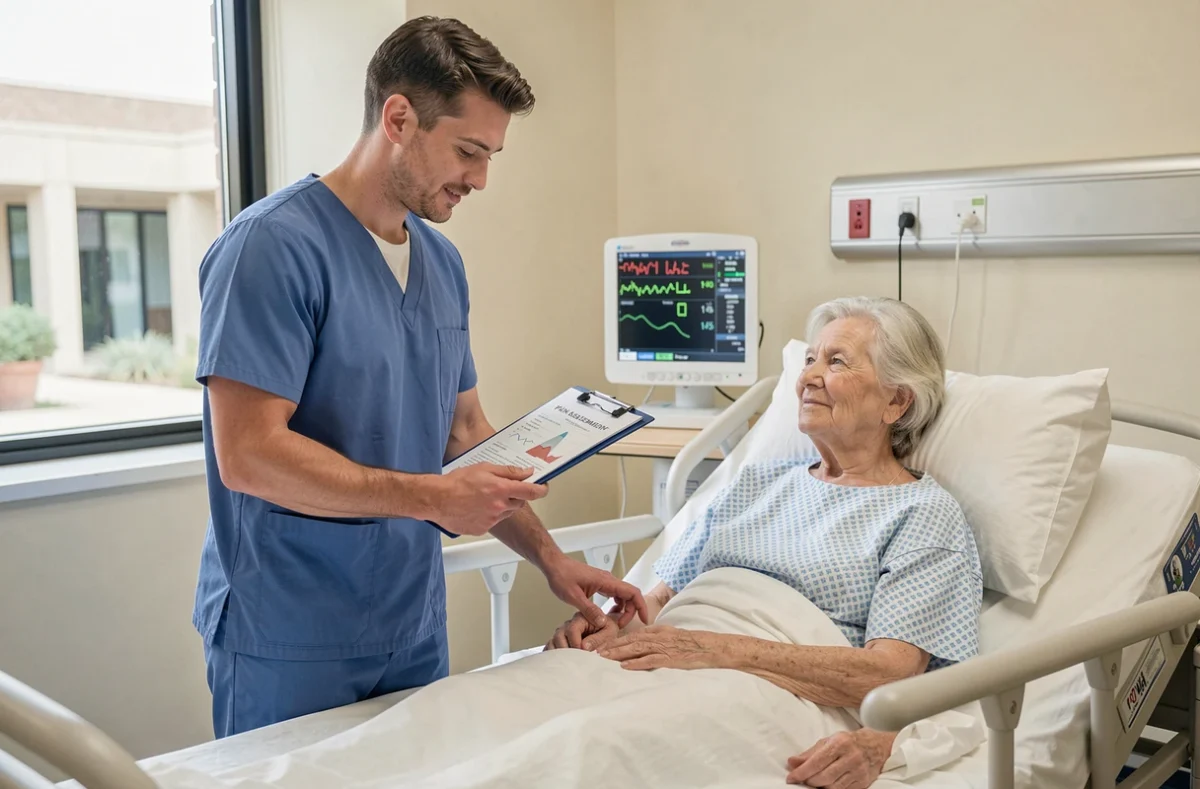
Chronic pain pathway: the three levels of referral from the HAS guide
The HAS published a guide restructuring the management of chronic pain at the end of 2024. The pathway is now organized into three clearly hierarchical levels of referral.
- The general practitioner in the community ensures the first level: identification, initial assessment, first-line treatment, and follow-up. They decide on the referral if the situation does not improve.
- Specialized consultations (neurologist, rheumatologist, pain physician in outpatient consultation) constitute the second level, with a goal of diagnostic re-evaluation and therapeutic adjustment.
- Chronic pain structures (SDC) in hospitals take over for complex, refractory cases, or those requiring a multidisciplinary approach including psychologist, physiotherapist, social worker.
What changes concretely on the ground: coordination between community and hospital becomes a structuring criterion of the pathway. It is no longer enough to send a patient with a letter. The guide emphasizes the development of the therapeutic project with the active participation of the patient, which implies formalized exchange times between the stakeholders.
Preventing chronicity from the start of work stoppage
The Ministry of Health has launched an experiment specifically targeting the prevention of chronicity and professional disconnection. The system provides for structured coordination between general practitioners, specialists, coordinating nurses or physiotherapists, and occupational health teams.
On the ground, this means early identification of warning signals: pain persisting beyond the expected healing time, catastrophizing, social isolation, repeated work stoppages. Acting in the first weeks reduces the risk of progression to chronicity.
Pain referent in institutions: a role that is formalizing
Until recently, the pain referent in a care unit was often a voluntary nurse, without an official framework. The situation is evolving. Recent university diplomas, such as the DU Pain 2026 from the University of Lille, now explicitly certify the ability to hold a pain referent position in hospitalization units and consultations.
The program of these trainings includes diagnosis, drug therapy, and non-drug approaches. This institutionalization gives the referent legitimacy to train their colleagues, audit service practices, and connect with chronic pain structures.

What the pain referent changes daily
A service with an identified and trained referent identifies under-treatment situations more quickly. They harmonize assessment protocols, ensure that the scales used correspond to the profiles of the service’s patients, and organize short but regular awareness sessions.
The referent is not an additional prescriber, but a facilitator. Their role is to streamline the transmission of information between the care team and the physician, and to identify patients who require specialized advice before the situation deteriorates.
Non-drug approaches: what has its place in a care protocol
Hypnoanalgesia, relaxation, transcutaneous neurostimulation (TENS), analgesic physiotherapy: complementary approaches do not replace analgesics, but they alter the trajectory of pain when integrated early.
In practice, they are mainly used in two contexts:
- Procedural pain (wound care, mobilizations, punctures), where distraction and conversational hypnosis have shown real clinical interest.
- Stabilized chronic pain, where active techniques (adapted exercise, education on the neurophysiology of pain) help the patient regain control.
The challenge for teams is not to master all these techniques, but to know which ones are available locally, to prescribe them at the right time, and to coordinate follow-up with trained practitioners.
Managing pain remains a team effort where each link, from the general practitioner to the pain referent to the nurse at the patient’s bedside, contributes to a result that the patient directly feels. Structuring pathways, training identified referents, and integrating complementary approaches at the right time: these are the three areas where practices are progressing the fastest today.